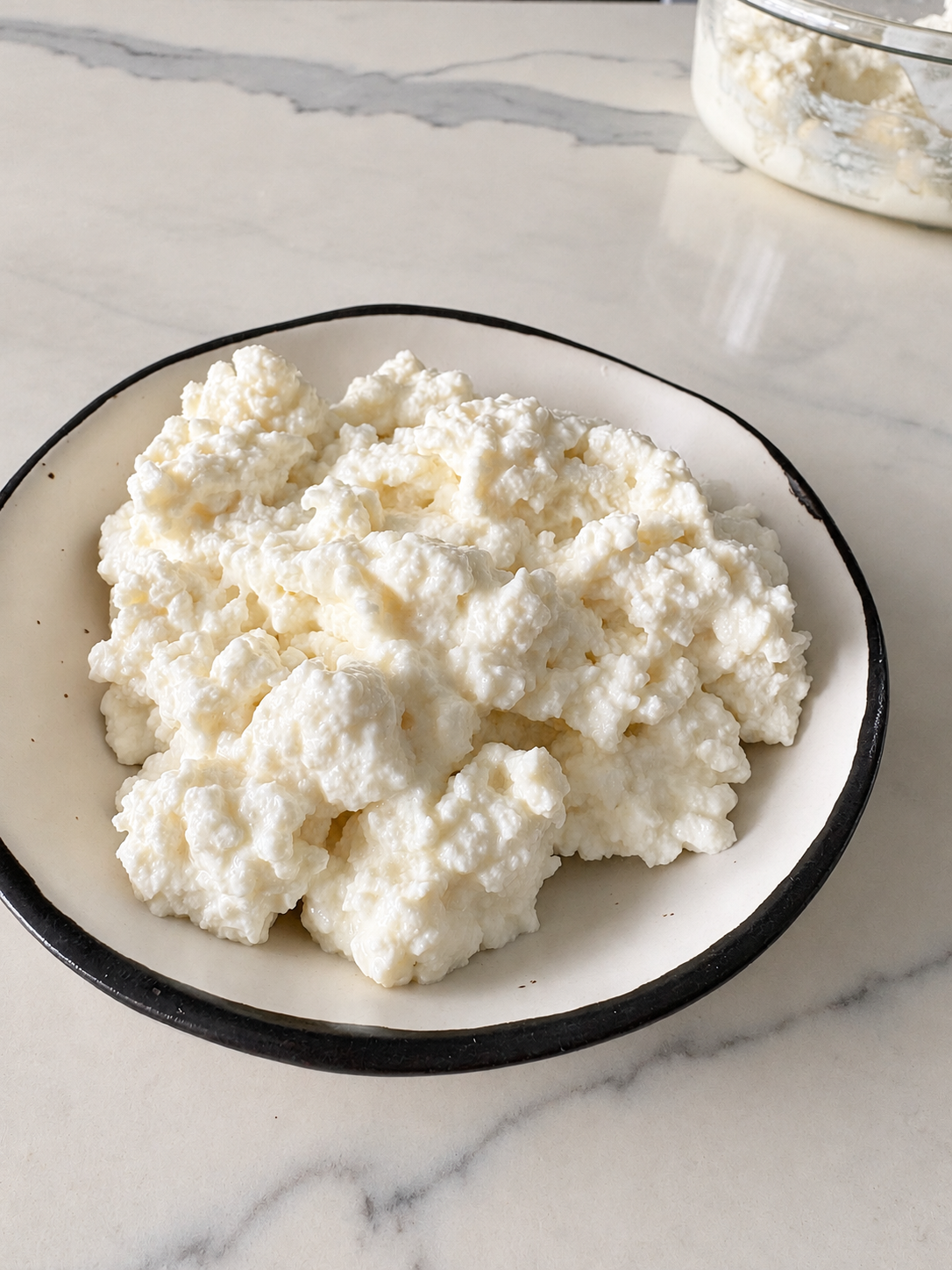
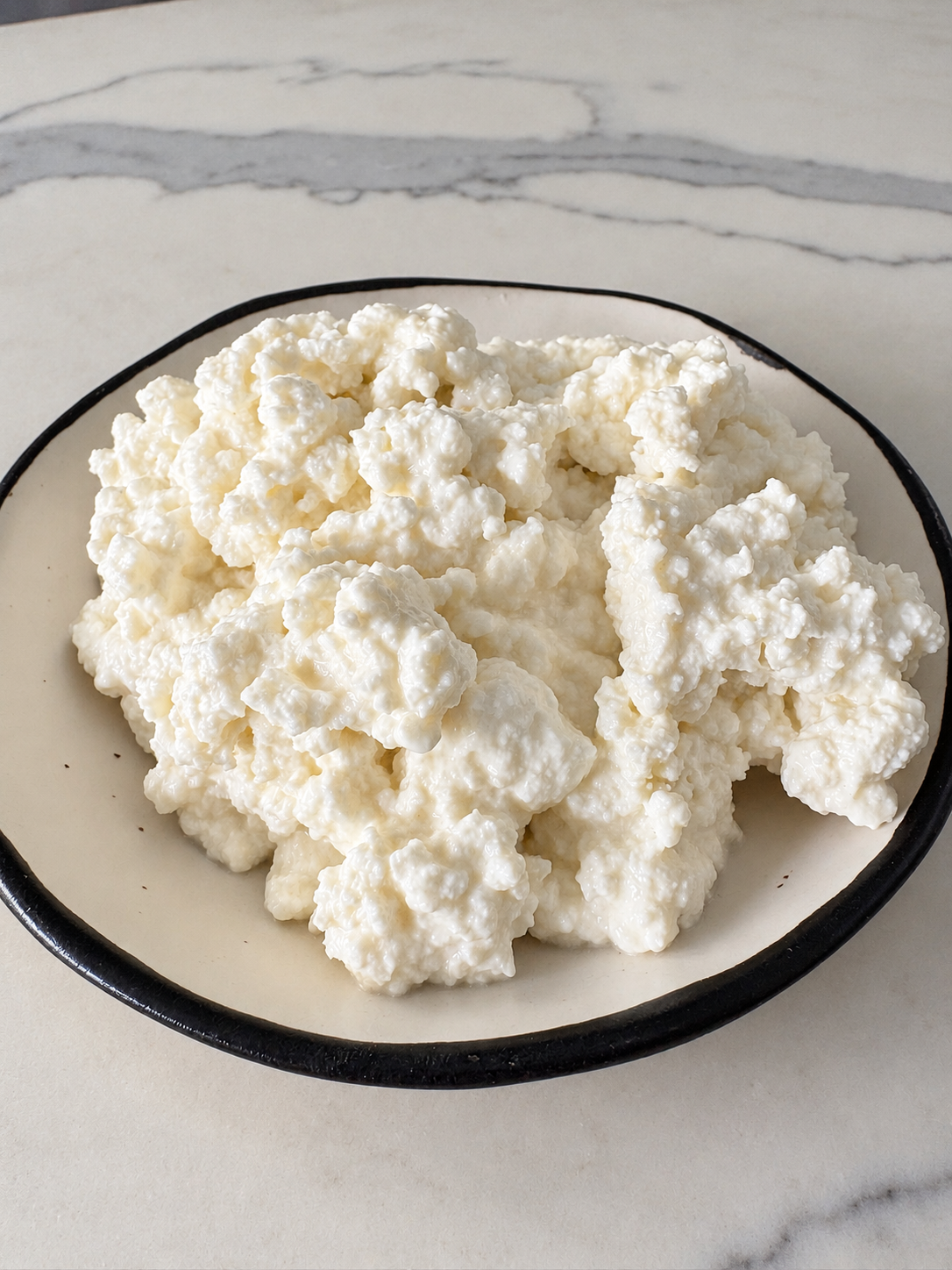
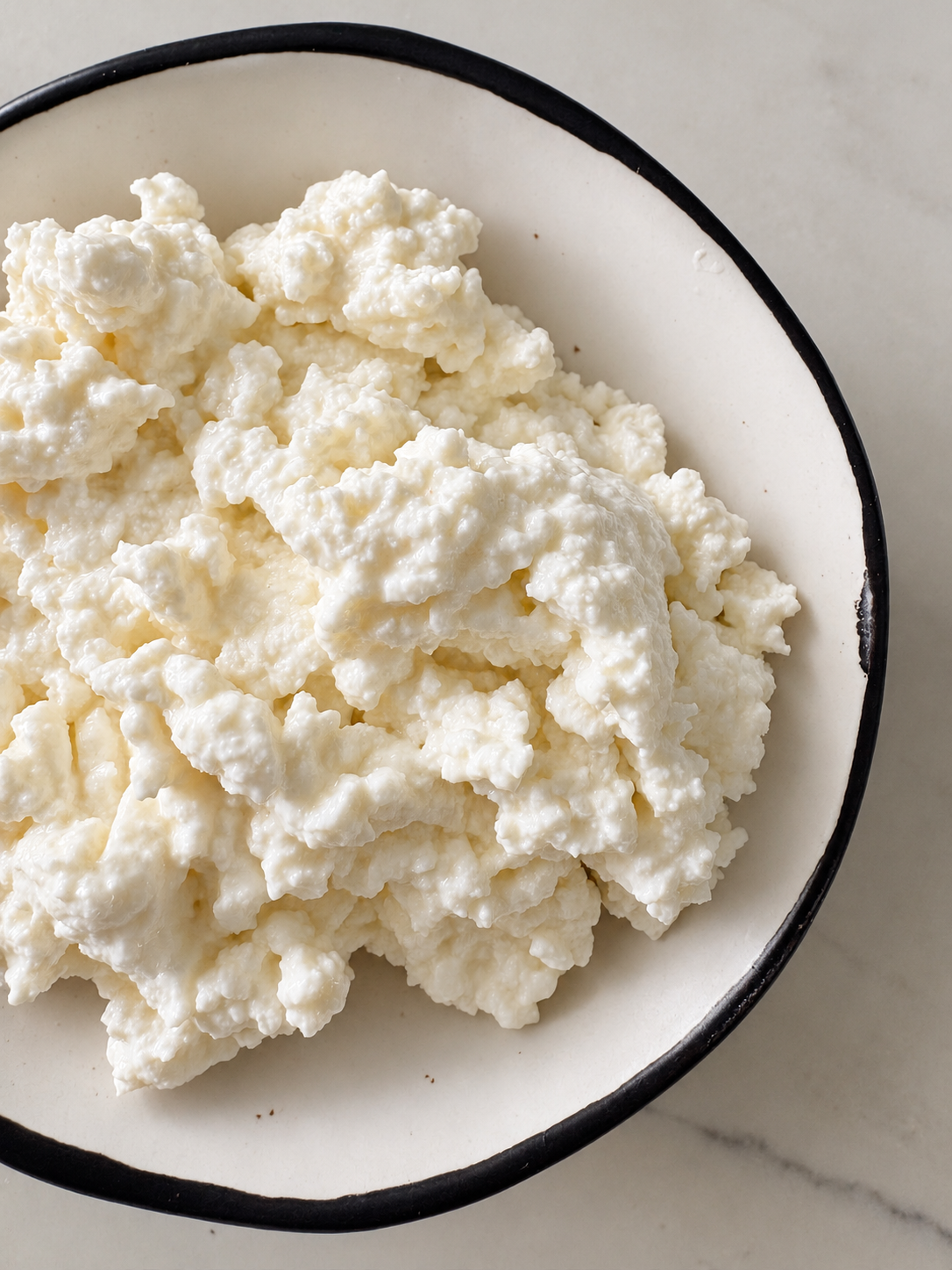
Creamy, fresh, and surprisingly easy to make, this homemade cottage cheese uses just milk, vinegar, and a little Greek yogurt. It's high in protein, made with simple ingredients, and perfect for everything from savory breakfasts to protein-packed snacks.
Why I've Started Making My Own Cottage Cheese
If you've been following me for a while, you know I love cottage cheese. It's one of those ingredients I always seem to have in my fridge. It's versatile, naturally rich in protein, and works just as well in sweet recipes as it does in savory ones.
But recently, I started wondering why I was buying so much of it when I could probably make it myself.
Turns out, it's ridiculously easy!
If you've ever made Indian paneer, you'll recognize the process. You heat milk, add something acidic to separate the curds from the whey, and strain. The difference is that we're not pressing the curds into a firm block. Instead, we're keeping them loose and adding a little Greek yogurt for that soft, creamy texture we love in cottage cheese.
For my first batch, I used Rokeby FitMilk Light, a lactose-free, high-protein milk, and white vinegar. Once the curds had drained, I stirred in some low-fat Greek yogurt to make them creamy.
The result? Fresh, delicious homemade cottage cheese that I'll definitely be making again.
And the best part? The hands-on preparation takes less than 10 minutes.
Why Make Your Own Cottage Cheese?
I'm all for convenience, and there's absolutely nothing wrong with buying cottage cheese. But there are a few reasons I love making my own.
You know exactly what's going into it.
This recipe uses three simple ingredients: milk, vinegar, and Greek yogurt. No unnecessary extras, and you can control the salt and creaminess yourself.
It's a great source of protein.
Cottage cheese is a convenient way to add protein to your meals, whether you're looking to support muscle maintenance, feel satisfied between meals, or build a more balanced breakfast.
Protein becomes particularly important as we move through midlife, when preserving muscle mass plays a valuable role in metabolic health, strength, and healthy aging.
You can customize the texture.
Prefer your cottage cheese thick and chunky? Drain it a little longer.
Love the soft, creamy consistency of store-bought cottage cheese? Keep some moisture in the curds and stir in Greek yogurt.
It's surprisingly simple.
No special equipment, complicated techniques, or hours of cooking. Just a saucepan, a strainer, and a few ingredients.
What Makes This Recipe Different?
Traditional cottage cheese is generally made using cultured milk and a longer process that allows the curds to develop their characteristic texture.
My version is a quicker, acid-set fresh cheese. It's technically closer to chenna, the soft curds used in Indian cooking, but with the addition of yogurt, it becomes a creamy, spoonable alternative to cottage cheese.
There are two things that make this recipe particularly useful.
1. Using High-Protein, Lactose-Free Milk
I used Rokeby FitMilk Light, which is higher in protein than regular milk and lactose-free.
Lactose-free milk works for this recipe because the vinegar acts on the milk proteins, not the lactose. Those proteins are still present even when the lactose has been broken down.
The higher protein content may also influence the amount of curds you get, although the final yield depends on how the milk has been processed and how much protein is retained during straining.
You can absolutely make this recipe with regular dairy milk, too.
2. Adding Greek Yogurt for Creaminess
This was my favorite little discovery.
After making the cottage cheese, I initially mixed in 50 g of low-fat Greek yogurt. It was beautifully creamy when freshly made, but after refrigerating it, I noticed the curds had firmed up.
So I added another 50 g of yogurt, bringing the total to 100 g.
That gave me a softer, creamier texture.
Next time, I'll also leave a little more whey in the curds rather than draining them quite as thoroughly.
It's a small adjustment, but it makes a difference.
Ingredients You'll Need
High-protein Low-fat milk (900 ml to 1L)
I used Rokeby low-fat fit milk which is also lactose free. You can substitute another dairy milk, although the yield and nutrition will vary. Avoid ultra-high-temperature processed milk where possible if you find it doesn't separate well.
White Vinegar (3 tablespoons)
Vinegar is what causes the milk proteins to coagulate and form curds. I used regular white vinegar with approximately 5% acidity.
You can also use lemon juice, but the amount required may differ depending on its acidity.
Low-Fat Greek Yogurt (100 g)
This is what gives the finished cottage cheese its creamy consistency. I used plain, low-fat Greek yogurt.
You can use another plain Greek yogurt, regular yogurt, or even a little milk or cream depending on the texture you're after.
Salt
A good pinch enhances the flavor, especially if you're planning to enjoy your cottage cheese in savory recipes.
Tips for the Creamiest Homemade Cottage Cheese
Don't boil the milk vigorously.
Heat it gently until small bubbles begin appearing around the edges, ideally around 185°F (85°C). You want it hot enough to separate when the vinegar is added, but not aggressively boiling.
Add the vinegar after turning off the heat.
This helps prevent the curds from becoming unnecessarily tough.
Stir gently.
Once the curds begin forming, avoid vigorous stirring. You want tender curds rather than tiny broken pieces.
Don't press or squeeze.
This is probably the most important difference between making paneer and making a soft cottage cheese alternative.
Pressing removes moisture and creates a firmer cheese. For cottage cheese, we want those curds to remain soft and loose.
Don't overstrain.
I learned this from my first batch! The curds firm up once refrigerated, so it's worth leaving them slightly wetter than you think they need to be.
Adjust the yogurt after chilling.
If your cottage cheese thickens in the refrigerator, simply stir in a little extra yogurt, milk, or reserved whey until it reaches your preferred consistency.
How to Enjoy Homemade Cottage Cheese
One of the reasons I love cottage cheese is how easily it fits into everyday meals.
Here are some of my favorite ways to use it:
-
Savory breakfast bowls: Add cottage cheese alongside eggs, avocado, tomatoes, and fresh herbs.
-
On toast: Spread it onto sourdough with sliced tomatoes, black pepper, and a drizzle of extra virgin olive oil or Everiday Garlic Chili Oil.
-
With fruit: Pair it with berries, cinnamon, and a little honey for a simple, protein-rich snack.
-
In scrambled eggs: Stir in a spoonful for extra protein and creaminess.
-
As a dip: Blend it with fresh herbs, garlic, lemon, and seasonings for a creamy, protein-rich dip.
-
In pasta sauces: Blend until smooth and use it to add creaminess and protein to your favorite sauces.
Storage and Food Safety
Store your homemade cottage cheese in a clean, airtight container in the refrigerator at 40°F (4°C) or below.
For best quality, enjoy within 4 to 5 days.
Because this is a fresh, homemade cheese without preservatives, refrigerate it promptly and avoid leaving it at room temperature for extended periods.
I wouldn't recommend freezing it if you want to preserve that creamy texture. Freezing can make the curds grainy and cause the liquid to separate.
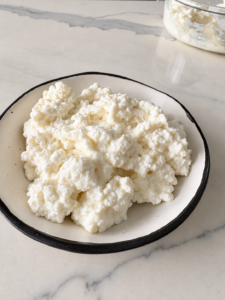
Homemade Cottage Cheese
Homemade cottage cheese in 10 minutes
INGREDIENTS
- 900 ml - 1L of a high protein low fat milk (I used Rokeby lactose-free FitMilk Light)
- 2 to 3 tbsp white vinegar (5% acidity)
- 100 g plain low-fat Greek yogurt
- salt to taste
INSTRUCTIONS
- Heat the milk. Pour the milk into a medium saucepan and gently heat over medium heat, stirring occasionally, until small bubbles appear around the edges. Aim for approximately 185°F (85°C).
- Add the vinegar. Turn off the heat and add the white vinegar, start with 2 Tbsp, stirring gently to distribute it through the milk.
- Allow the curds to form. The milk should begin separating into white curds and yellowish whey. Let it sit for approximately 5 minutes. If the whey remains milky and the curds haven't fully separated, add a little more vinegar, one teaspoon at a time.
- Strain gently. Pour the mixture into a fine-mesh strainer or cheesecloth. Allow the whey to drain for approximately 3 to 5 minutes. Do not press or squeeze the curds. Reserve a little whey if you'd like to adjust the consistency later.
- Add the yogurt. Transfer the drained curds to a bowl. Once cooled, gently stir in the Greek yogurt and salt until creamy.
- Chill and adjust. Refrigerate in an airtight container. If the cottage cheese firms up after chilling, stir in a little reserved whey, milk, or additional yogurt until it reaches your preferred consistency.
NOTES:
Estimated Nutritionals (100g)
Calories: 103 | Protein: 14.7g | Fat: 4.3g | Carbs: 2.7g
(based on using Rokeby low-fat fit milk & chobani low-fat greek yogurt)